Showing posts with label Tourism 旅游. Show all posts
Showing posts with label Tourism 旅游. Show all posts
Thursday, November 28, 2024

Tuesday, October 15, 2024
Tuesday, January 21, 2020
战乱与和平 一探柬埔寨红色时期的历史
战乱与和平 一探柬埔寨红色时期的历史

闻名于世的“高棉微笑”,独特精致的石雕,令人叹为观止。(薛渤杨摄)
作者在吴哥窟感受到诸神的纯净,在战争博物馆看到的展品让他感受到红高棉时期的悲惨。
提起柬埔寨,人们第一个想到的也许就是吴哥窟(Angkor Wat)。说实话,自己对这个陌生的国家一直没有太多感觉,直到耳朵被“西哈诺亲王”、“红色高棉”词条磨出了茧子,才决定展开这次的柬埔寨三天之旅。
背上行囊,坐上TukTuk,我们在柬埔寨西北城市暹粒观看吴哥的建筑,触碰高棉的文化。
吴哥窟建造者透彻领悟人性

荒烟蔓草,伫立在古老文明的吴哥寺中央眺望远方。
“Angkor”即“城市”,“Wat”则是“寺庙”的意思。它曾是古高棉王国的首都,与埃及金字塔、中国万里长城、印度尼西亚婆罗浮屠千佛坛并称为东方四大奇观,同时也是世界七大奇迹之一。
游玩吴哥窟,多少还是要事先简单了解一下它的历史,不然真的只是走马观花。吴哥城初建于九世纪,是东南亚史上最宏伟的一座都城,其鼎盛时期据估算,人口达到上百万,规模之大远超罗马城。
公元1431年,泰国人入侵高棉,高棉人被迫离开吴哥,在金边建立了新的首都,从此吴哥湮没在丛林之中。直到1860年,法国植物学家亨利·穆奥(Henri Mouhot)为了收集植物标本来到暹粒,吴哥城才得以重见天日。
吴哥城里建筑墙体都呈现出一种青铜色,冰冷、沉重,仿佛给人一种快要窒息的感觉。
墙上的头像矗立千年,诸神姿态栩栩如生,历经风雨微笑依旧。这些笑脸安详而静谧,从容又纯净,仿佛有一种穿越时空与万物的力量,令人震撼。
台湾知名画家、诗人与作家蒋勋在《吴哥之美》中曾写到:“吴哥寺被誉为建筑的奇迹,奇迹是建造者如此透彻领悟人性。他并不是在盖房子,他为这个城市留下心灵的空间,是‘城中之城’,是肉身里心灵的留白。”
在实地探访之后,这段话非常值得反复咀嚼,回味无穷。
吴哥的修复工作一直在进行,直到现在也没有结束。《古墓奇兵》《花样年华》等电影都曾于此取景。
残酷的红高棉大屠杀

位于暹粒的战争博物馆,锈迹斑斑的军事装备随处可见。
至于柬埔寨的近代史,更是令人为之震撼。早前因为对红高棉大屠杀这段残酷历史有所耳闻,因此当天的行程特意让导游安排参观博物馆。
先简单介绍一下柬埔寨的近代史:1863年,柬埔寨沦为法国保护国,1940年被日军占领,1945年日本投降后又被法国重新占领。柬埔寨在1953年11月9日宣布独立,但却在60年代爆发内战。先是政变,然后在波博执政时期发生了骇人听闻的红高棉大屠杀,四年期间(1975年至1979年)期间杀死了200多万人(相当于柬埔寨四分之一的人口),再到越南1978年入侵(解放)柬埔寨并于1989年撤军后,柬埔寨才逐渐恢复和平。
导游带我们来到了一个特别不起眼的战争博物馆。坦白讲,来到这个博物馆大门时,我并没有对它抱有太高的期望,但是在买完门票进来后(只花了5美元,约6.70新元),一切都改变了。
据说,博物馆本身就位于一个古老的地雷场和杀戮场,它记录着一段残酷可悲的战争历史。大部分展品都是锈迹斑斑的军事装备,包括枪支和弹药。整个博物馆并不花哨,但它给人的那种身临其境之感,让人真切感受到了红高棉时期的悲惨。
最引人注目的是展示这些故事的信息板,字里行间透露着当时的恐怖生活氛围,揭露了当年波博执政时期的黑暗。
美国、苏联、越南和中国都为当年柬埔寨战争提供过武器和炸弹。原始照片让人百感交集,看到红高棉制服更是让人毛骨悚然。
三天时间很短,这趟柬埔寨暹粒之行是一场文化之旅,吴哥窟得玩,但这战争博物馆更是不能错过。和平不易,以史为鉴。
~联合早报~
闻名于世的“高棉微笑”,独特精致的石雕,令人叹为观止。(薛渤杨摄)
作者在吴哥窟感受到诸神的纯净,在战争博物馆看到的展品让他感受到红高棉时期的悲惨。
提起柬埔寨,人们第一个想到的也许就是吴哥窟(Angkor Wat)。说实话,自己对这个陌生的国家一直没有太多感觉,直到耳朵被“西哈诺亲王”、“红色高棉”词条磨出了茧子,才决定展开这次的柬埔寨三天之旅。
背上行囊,坐上TukTuk,我们在柬埔寨西北城市暹粒观看吴哥的建筑,触碰高棉的文化。
吴哥窟建造者透彻领悟人性
荒烟蔓草,伫立在古老文明的吴哥寺中央眺望远方。
“Angkor”即“城市”,“Wat”则是“寺庙”的意思。它曾是古高棉王国的首都,与埃及金字塔、中国万里长城、印度尼西亚婆罗浮屠千佛坛并称为东方四大奇观,同时也是世界七大奇迹之一。
游玩吴哥窟,多少还是要事先简单了解一下它的历史,不然真的只是走马观花。吴哥城初建于九世纪,是东南亚史上最宏伟的一座都城,其鼎盛时期据估算,人口达到上百万,规模之大远超罗马城。
公元1431年,泰国人入侵高棉,高棉人被迫离开吴哥,在金边建立了新的首都,从此吴哥湮没在丛林之中。直到1860年,法国植物学家亨利·穆奥(Henri Mouhot)为了收集植物标本来到暹粒,吴哥城才得以重见天日。
吴哥城里建筑墙体都呈现出一种青铜色,冰冷、沉重,仿佛给人一种快要窒息的感觉。
墙上的头像矗立千年,诸神姿态栩栩如生,历经风雨微笑依旧。这些笑脸安详而静谧,从容又纯净,仿佛有一种穿越时空与万物的力量,令人震撼。
台湾知名画家、诗人与作家蒋勋在《吴哥之美》中曾写到:“吴哥寺被誉为建筑的奇迹,奇迹是建造者如此透彻领悟人性。他并不是在盖房子,他为这个城市留下心灵的空间,是‘城中之城’,是肉身里心灵的留白。”
在实地探访之后,这段话非常值得反复咀嚼,回味无穷。
吴哥的修复工作一直在进行,直到现在也没有结束。《古墓奇兵》《花样年华》等电影都曾于此取景。
残酷的红高棉大屠杀
位于暹粒的战争博物馆,锈迹斑斑的军事装备随处可见。
至于柬埔寨的近代史,更是令人为之震撼。早前因为对红高棉大屠杀这段残酷历史有所耳闻,因此当天的行程特意让导游安排参观博物馆。
先简单介绍一下柬埔寨的近代史:1863年,柬埔寨沦为法国保护国,1940年被日军占领,1945年日本投降后又被法国重新占领。柬埔寨在1953年11月9日宣布独立,但却在60年代爆发内战。先是政变,然后在波博执政时期发生了骇人听闻的红高棉大屠杀,四年期间(1975年至1979年)期间杀死了200多万人(相当于柬埔寨四分之一的人口),再到越南1978年入侵(解放)柬埔寨并于1989年撤军后,柬埔寨才逐渐恢复和平。
导游带我们来到了一个特别不起眼的战争博物馆。坦白讲,来到这个博物馆大门时,我并没有对它抱有太高的期望,但是在买完门票进来后(只花了5美元,约6.70新元),一切都改变了。
据说,博物馆本身就位于一个古老的地雷场和杀戮场,它记录着一段残酷可悲的战争历史。大部分展品都是锈迹斑斑的军事装备,包括枪支和弹药。整个博物馆并不花哨,但它给人的那种身临其境之感,让人真切感受到了红高棉时期的悲惨。
最引人注目的是展示这些故事的信息板,字里行间透露着当时的恐怖生活氛围,揭露了当年波博执政时期的黑暗。
美国、苏联、越南和中国都为当年柬埔寨战争提供过武器和炸弹。原始照片让人百感交集,看到红高棉制服更是让人毛骨悚然。
三天时间很短,这趟柬埔寨暹粒之行是一场文化之旅,吴哥窟得玩,但这战争博物馆更是不能错过。和平不易,以史为鉴。
~联合早报~
Monday, November 25, 2019
The motodop driver, porter who guides tourists in Phnom Tbeng
The motodop driver, porter who guides tourists in Phnom Tbeng

A view of the Tbeng Meanchey natural heritage site in Preah Vihear province. Yousos Apdoulrashim
Rem Thoeun is one of many villagers who live near the peak of Phnom Tbeng, earning his income in the eco-tourism sector at Preah Vihear province’s Tbeng Meanchey natural heritage site.
Thoeun earns most of his living as a motodop driver (a motorbike taxi rider) transporting tourists to popular local attractions – including Tbeng Waterfall, the Three Rock Pagoda and the Taing You waterfall and pagoda – in and around Phnom Tbeng.
But he also works as a porter, carrying things from the mountain’s foot to the peak.
Thoeun says his only option is to take up jobs requiring hard labour to support his family as he did not have educational opportunities as a child.
Some 24 years ago, when the last remnants of Pol Pot’s Khmer Rouge militants were fighting the government, Thoeun’s family moved him from the line of fire and went to find a better life on the mountain.
Thoeun, 27, told The Post: “I’ve lived here since I was three years old when my parents moved us from Kulen district because of the fighting.
“They were worried about safety and kept shifting from place to place before finally settling on Phnom Tbeng. After the whole country was freed of the rebels, we decided to remain here permanently, even though at the time we barely survived going up and down the mountain [for money].”
Growing up on the mountain, Thoeun did not have the opportunity to study at school or learn a trade.
So though he now wants to find a new job outside his backbreaking labour on Phnom Tbeng, Thoeun says he does not know what else he can do.

Rem Thoeun (second left) says his only option is to take up jobs requiring hard labour to support his family as he did not have educational opportunities as a child. Hong Menea
“I want to find a job in town but I don‘t know what to do. I want to start a new life that can earn me a higher income.
“I first studied in Grade 2 when I was 15, but I found it difficult as I was pretty old for that low grade,” says the illiterate father of two.
Driving a tourist on the back of his motorbike, Thoeun navigates along the muddy trail, taking the time to describe the scenery to his passenger.
Driving past a stack of rocks he remarks, “they [locals] are superstitious about this place. They believe if they can pile the rocks up high, it will boost their fortunes”.
On the days when Thoeun works as a guide, he picks up his customers around 9am. They have lunch at Dombok Khmao Pagoda before heading to a waterfall located about 1km from the temple.
Thoeun says tourists also love hiking to the Three Rock Pagoda before visiting Taing You waterfall and pagoda.
Tourists can choose to spend a night at Taing You Pagoda or return in the evening, with a round trip costing 150,000 riel ($37) per person.
Thoeun says: “Most tourists hike up Phnom Tbeng via the 1,345 steps of the Three Rock Pagoda. Then, they head to Taing You temple and the waterfall. There is another option ... they can take the 15km trek up an unpaved trail from Bakkam village, in Chheanmuk commune, but it is not popular.”

Rem Thoeun (second left) says his only option is to take up jobs requiring hard labour to support his family as he did not have educational opportunities as a child. Hong Menea
At the Three Rock Pagoda, where his client prayed for happiness at the shrine and enjoyed the valley view from the mountain top, Thoeun takes a break and sips a cold drink at a small store.
He is stood among a dozen porters standing at the mountain peak, waiting to receive bookings for porter and transport jobs.
“I also work as a porter to carry things to the mountain peak. But sometimes I have nothing to do as most people don’t bring heavy items and they don’t know we offer such services,” says Thoeun.
Like the other porters, Thoeun gets 30,000 riel to carry a load of between 30 and 40kg.
“Occasionally, generous people give me 40,000 to 50,000 riel to carry a pack of milled rice. I can carry things about three or four times per day. But usually, I only get one job per day, or nothing at all,” he says.
For those who plan to visit Phnom Tbeng and need transportation, Thoeun can be contacted via telephone (088 773 3062).
~Phnom Penh Post~
A view of the Tbeng Meanchey natural heritage site in Preah Vihear province. Yousos Apdoulrashim
Rem Thoeun is one of many villagers who live near the peak of Phnom Tbeng, earning his income in the eco-tourism sector at Preah Vihear province’s Tbeng Meanchey natural heritage site.
Thoeun earns most of his living as a motodop driver (a motorbike taxi rider) transporting tourists to popular local attractions – including Tbeng Waterfall, the Three Rock Pagoda and the Taing You waterfall and pagoda – in and around Phnom Tbeng.
But he also works as a porter, carrying things from the mountain’s foot to the peak.
Thoeun says his only option is to take up jobs requiring hard labour to support his family as he did not have educational opportunities as a child.
Some 24 years ago, when the last remnants of Pol Pot’s Khmer Rouge militants were fighting the government, Thoeun’s family moved him from the line of fire and went to find a better life on the mountain.
Thoeun, 27, told The Post: “I’ve lived here since I was three years old when my parents moved us from Kulen district because of the fighting.
“They were worried about safety and kept shifting from place to place before finally settling on Phnom Tbeng. After the whole country was freed of the rebels, we decided to remain here permanently, even though at the time we barely survived going up and down the mountain [for money].”
Growing up on the mountain, Thoeun did not have the opportunity to study at school or learn a trade.
So though he now wants to find a new job outside his backbreaking labour on Phnom Tbeng, Thoeun says he does not know what else he can do.
Rem Thoeun (second left) says his only option is to take up jobs requiring hard labour to support his family as he did not have educational opportunities as a child. Hong Menea
“I want to find a job in town but I don‘t know what to do. I want to start a new life that can earn me a higher income.
“I first studied in Grade 2 when I was 15, but I found it difficult as I was pretty old for that low grade,” says the illiterate father of two.
Driving a tourist on the back of his motorbike, Thoeun navigates along the muddy trail, taking the time to describe the scenery to his passenger.
Driving past a stack of rocks he remarks, “they [locals] are superstitious about this place. They believe if they can pile the rocks up high, it will boost their fortunes”.
On the days when Thoeun works as a guide, he picks up his customers around 9am. They have lunch at Dombok Khmao Pagoda before heading to a waterfall located about 1km from the temple.
Thoeun says tourists also love hiking to the Three Rock Pagoda before visiting Taing You waterfall and pagoda.
Tourists can choose to spend a night at Taing You Pagoda or return in the evening, with a round trip costing 150,000 riel ($37) per person.
Thoeun says: “Most tourists hike up Phnom Tbeng via the 1,345 steps of the Three Rock Pagoda. Then, they head to Taing You temple and the waterfall. There is another option ... they can take the 15km trek up an unpaved trail from Bakkam village, in Chheanmuk commune, but it is not popular.”
Rem Thoeun (second left) says his only option is to take up jobs requiring hard labour to support his family as he did not have educational opportunities as a child. Hong Menea
At the Three Rock Pagoda, where his client prayed for happiness at the shrine and enjoyed the valley view from the mountain top, Thoeun takes a break and sips a cold drink at a small store.
He is stood among a dozen porters standing at the mountain peak, waiting to receive bookings for porter and transport jobs.
“I also work as a porter to carry things to the mountain peak. But sometimes I have nothing to do as most people don’t bring heavy items and they don’t know we offer such services,” says Thoeun.
Like the other porters, Thoeun gets 30,000 riel to carry a load of between 30 and 40kg.
“Occasionally, generous people give me 40,000 to 50,000 riel to carry a pack of milled rice. I can carry things about three or four times per day. But usually, I only get one job per day, or nothing at all,” he says.
For those who plan to visit Phnom Tbeng and need transportation, Thoeun can be contacted via telephone (088 773 3062).
~Phnom Penh Post~
Sunday, November 24, 2019
Exploring the Kingdom’s highest mountain peak in Kampong Speu
Exploring the Kingdom’s highest mountain peak in Kampong Speu

Local guides recommend visitors spend at least three days in the forest to discover hidden treasures, explore haunted sites and bird watch for exquisite species. Hong Menea
Keo Rattana had to trek through thick bamboo jungles, climb steep inclines and snake his way up mountain cliffs by using a rope to make his way to the top of Kampong Speu province’s Oral Mountain – Cambodia’s highest peak.
Rattana is among thousands to have made the same arduous journey this year, with 3,500 people having already overcome the same challenges in order to conquer Oral.
“We’ve noticed that the number of tourists visiting has jumped dramatically compared to previous years,” says Srae Ken Community chief Chhoeun Chhim.
“Our community has provided services to about 3,500 visitors in the first half of this year and we expect at least 500 more [climbers] by the end of 2019,” says Chhim.
Local guides recommend visitors spend at least three days and two nights in the forest, which is enough to discover hidden treasures, explore haunted sites and bird watch for rare and exquisite species which call the far eastern edge of the Cardamom Mountains home.

There are a number of rare birds, including the chestnut-headed partridge (identifiable by white strips above its wings and white stripes below its belly) and Cambodian Laughingthrush – both of which are only found in Cambodia, according to Chhim.
Rattana says that almshouses nestled in the bamboo forests served as an oasis of sorts. The first one – about 3km into the trek – had a small space for cooking and access to enough water to satisfy up to five to six people.
Often climbers choose to quicken their pace and skip the first almshouse in order to recover at the Hermit Stop almshouse – which is not only larger, but also has more water (particularly in the rainy season).
“Most climbers leave behind supplies and water for people behind them,” reveals Rattana.
There are a number of rare birds, including the chestnut-headed partridge, identifiable by white strips above its wings and white stripes below its belly, and the Cambodian Laughingthrush. Hong Menea
Eight kilometres from the first alm house is the final rest area – where visitors who prefer not to camp outside spend the night in a cool, solar-powered wooden hut with additional structures adjacent to them centring a shrine. Be warned, however, as temperatures there can drop as low as six degrees Celsius.
There, visitors make it a point to see the remains of a Cambodian International Airlines plane which crashed in 1974.
“Even though it was overrun by plants and moss years ago, the quality of the metal is still good,” says Theang Soth – who has been guiding climbers since 2002.
“You can even see remnants such as clothing and aircraft debris that still remain because Cambodian’s believe that it’s bad to take belongings from the dead,” adds Soth, 47.
It’s experiences like this that make people stop in their tracks and forgo the frivolities of snapping selfies in order to appreciate the preciousness of their journey.
Always the adventurers, Rattana and his friends didn’t pack any camping equipment – preferring to drink water through natural sources, filtered through small filtration devices, and dining on dried and ready-to-eat meals.
“We didn’t have to bring many things, even clothes; we only brought a few changes, one to wear and one to keep in by backpack. As I ascend, I wash the used clothing and put on a fresh T-shirt and shorts,” says Rattana.

Aside from Srae Ken Commune, where Rattana and his friends chose to begin their climb, additional tours are offered in nearby Outou and Trapang Chhrey communes.
Commune chief Chhim recommends hiring local guides to help navigate the potentially treacherous terrain and to help carry supplies. The service costs $35 per day for international tourists, who can also pre-order food for their climb.
The road leading to Srae Ken can be bumpy – with large rocks and potholes leading to the commune – visitors should allot at least half a day for a tractor ride to reach the foot of the mountain.
Those intimidated by the thought of undertaking the feat should know that it was the first time Rattana had ever tried mountain climbing.
“It was my first experience and now I have reached the highest mountain in country with my friends,” boasts Rattana.
He added that the most difficult part of the journey was the 3km trek through bamboo forest.
”It’s hot and stuffy because it’s dense. If possible, it’s best to begin early in the morning.
“If we had begun our summit in the late morning, we would hardly be able to breathe and it would prevent us from reaching the mountain’s peak.”
~Phnom Penh Post~
Local guides recommend visitors spend at least three days in the forest to discover hidden treasures, explore haunted sites and bird watch for exquisite species. Hong Menea
Keo Rattana had to trek through thick bamboo jungles, climb steep inclines and snake his way up mountain cliffs by using a rope to make his way to the top of Kampong Speu province’s Oral Mountain – Cambodia’s highest peak.
Rattana is among thousands to have made the same arduous journey this year, with 3,500 people having already overcome the same challenges in order to conquer Oral.
“We’ve noticed that the number of tourists visiting has jumped dramatically compared to previous years,” says Srae Ken Community chief Chhoeun Chhim.
“Our community has provided services to about 3,500 visitors in the first half of this year and we expect at least 500 more [climbers] by the end of 2019,” says Chhim.
Local guides recommend visitors spend at least three days and two nights in the forest, which is enough to discover hidden treasures, explore haunted sites and bird watch for rare and exquisite species which call the far eastern edge of the Cardamom Mountains home.
There are a number of rare birds, including the chestnut-headed partridge (identifiable by white strips above its wings and white stripes below its belly) and Cambodian Laughingthrush – both of which are only found in Cambodia, according to Chhim.
Rattana says that almshouses nestled in the bamboo forests served as an oasis of sorts. The first one – about 3km into the trek – had a small space for cooking and access to enough water to satisfy up to five to six people.
Often climbers choose to quicken their pace and skip the first almshouse in order to recover at the Hermit Stop almshouse – which is not only larger, but also has more water (particularly in the rainy season).
“Most climbers leave behind supplies and water for people behind them,” reveals Rattana.
There are a number of rare birds, including the chestnut-headed partridge, identifiable by white strips above its wings and white stripes below its belly, and the Cambodian Laughingthrush. Hong Menea
Eight kilometres from the first alm house is the final rest area – where visitors who prefer not to camp outside spend the night in a cool, solar-powered wooden hut with additional structures adjacent to them centring a shrine. Be warned, however, as temperatures there can drop as low as six degrees Celsius.
There, visitors make it a point to see the remains of a Cambodian International Airlines plane which crashed in 1974.
“Even though it was overrun by plants and moss years ago, the quality of the metal is still good,” says Theang Soth – who has been guiding climbers since 2002.
“You can even see remnants such as clothing and aircraft debris that still remain because Cambodian’s believe that it’s bad to take belongings from the dead,” adds Soth, 47.
It’s experiences like this that make people stop in their tracks and forgo the frivolities of snapping selfies in order to appreciate the preciousness of their journey.
Always the adventurers, Rattana and his friends didn’t pack any camping equipment – preferring to drink water through natural sources, filtered through small filtration devices, and dining on dried and ready-to-eat meals.
“We didn’t have to bring many things, even clothes; we only brought a few changes, one to wear and one to keep in by backpack. As I ascend, I wash the used clothing and put on a fresh T-shirt and shorts,” says Rattana.
Aside from Srae Ken Commune, where Rattana and his friends chose to begin their climb, additional tours are offered in nearby Outou and Trapang Chhrey communes.
Commune chief Chhim recommends hiring local guides to help navigate the potentially treacherous terrain and to help carry supplies. The service costs $35 per day for international tourists, who can also pre-order food for their climb.
The road leading to Srae Ken can be bumpy – with large rocks and potholes leading to the commune – visitors should allot at least half a day for a tractor ride to reach the foot of the mountain.
Those intimidated by the thought of undertaking the feat should know that it was the first time Rattana had ever tried mountain climbing.
“It was my first experience and now I have reached the highest mountain in country with my friends,” boasts Rattana.
He added that the most difficult part of the journey was the 3km trek through bamboo forest.
”It’s hot and stuffy because it’s dense. If possible, it’s best to begin early in the morning.
“If we had begun our summit in the late morning, we would hardly be able to breathe and it would prevent us from reaching the mountain’s peak.”
~Phnom Penh Post~
Tuesday, November 12, 2019
King Sihamoni presides over opening of Water Festival
King Sihamoni presides over opening of Water Festival

King Norodom Sihamoni presided over the lighting of the lantern barges, representing the many ministries, in front of the Royal Palace on Sunday as the first day of the annual Water Festival celebrations went smoothly.
Bun Veasna, an official at the National Committee for Organising National and International Festivals, told The Post on Sunday that the first day of the festival had gone smoothly.
Government leaders including Prime Minister Hun Sen, Senate President Say Chhum, President of the National Assembly Heng Samrin and Minister of Interior Sar Kheng attended the event with the King.
“The first boat racing event went smoothly like every year. We finished the first round in the morning, and finished the second in the afternoon,” Veasna said.
National Police said they had deployed nearly 20,000 police officers in Phnom Penh to provide security at the festival, which ends on Tuesday.
On his Facebook page, Prime Minister Hun Sen said Cambodians were enjoying the festival with big smiles on their faces. He said security forces were safeguarding the participants as well as the boat crews.
“Besides enjoying the boat racing on the river, people can shop at many stalls. May I wish all our compatriots happiness and good luck,” Hun Sen wrote.
Festival goer Sok Chea said he was enjoying himself as it was one of the biggest events of the year. He said he never misses it.
“There are fewer people here today compared to the first day of the Water Festival last year. But I think there will be more people tomorrow,” Chea said.
Daun Ley from Phnom Penh said she appreciated the security arrangements that had enabled her to enjoy the festival without fear.
“Along the streets, it is very safe because there is security taking care of us. I have no concerns and I am enjoying myself,” Ley said.

Boat racing on the Tonle Sap river on Sunday.
~Phnom Penh Post~
King Norodom Sihamoni presided over the lighting of the lantern barges, representing the many ministries, in front of the Royal Palace on Sunday as the first day of the annual Water Festival celebrations went smoothly.
Bun Veasna, an official at the National Committee for Organising National and International Festivals, told The Post on Sunday that the first day of the festival had gone smoothly.
Government leaders including Prime Minister Hun Sen, Senate President Say Chhum, President of the National Assembly Heng Samrin and Minister of Interior Sar Kheng attended the event with the King.
“The first boat racing event went smoothly like every year. We finished the first round in the morning, and finished the second in the afternoon,” Veasna said.
National Police said they had deployed nearly 20,000 police officers in Phnom Penh to provide security at the festival, which ends on Tuesday.
On his Facebook page, Prime Minister Hun Sen said Cambodians were enjoying the festival with big smiles on their faces. He said security forces were safeguarding the participants as well as the boat crews.
“Besides enjoying the boat racing on the river, people can shop at many stalls. May I wish all our compatriots happiness and good luck,” Hun Sen wrote.
Festival goer Sok Chea said he was enjoying himself as it was one of the biggest events of the year. He said he never misses it.
“There are fewer people here today compared to the first day of the Water Festival last year. But I think there will be more people tomorrow,” Chea said.
Daun Ley from Phnom Penh said she appreciated the security arrangements that had enabled her to enjoy the festival without fear.
“Along the streets, it is very safe because there is security taking care of us. I have no concerns and I am enjoying myself,” Ley said.
Boat racing on the Tonle Sap river on Sunday.
~Phnom Penh Post~
Thursday, July 4, 2019
泰柬列车中断45年 泰下周一重启通向边境车站服务
泰柬列车中断45年 泰下周一重启通向边境车站服务

泰国东部最靠近柬埔寨边界的班克隆卢卡(Ban Klong luk)列车站,将来旅客可从这个站续程进入柬埔寨。(互联网)
泰国与柬埔寨两个月前重新开通中断了45年的跨境铁路,跨境通车至今还未落实,不过泰国境内通向边境车站的列车服务已定在下周一开始。
泰柬两国在4月22日在边境举行了盛大的跨境铁路重开仪式,但列车服务需等到两国确定班车列表和其他相关细节之后才能启动。
泰国铁路局昨天(6月25日)宣布,泰国境内铁路段的列车服务将从7月1日开始。
新列车服务连接首都曼谷和沙缴府(Sa Kaeo)城镇阿兰雅(Aranyaprathet),直到班克隆卢卡(Ban Klong luk)边境车站;每天来回各两趟。
按协议,这些列车服务将来可直达柬埔寨西北部边陲小镇波贝(Poipet),然后直达柬埔寨首都金边。从波贝到金边的370公里长铁路已在去年重开,不过,柬方至今还未宣布什么时候启动通往波贝的列车服务。
柬埔寨的铁路是由法国殖民政府建造,后来大多毁于战乱中。从波贝到金边的线路也在1973年内战期间被破坏和停用,近期得到亚洲开发银行出资协助重建。
泰柬铁路相通之后,来往两国的交通时间将缩短,对双边贸易和跨境旅游业都有好处。
~早报网~
泰国东部最靠近柬埔寨边界的班克隆卢卡(Ban Klong luk)列车站,将来旅客可从这个站续程进入柬埔寨。(互联网)
泰国与柬埔寨两个月前重新开通中断了45年的跨境铁路,跨境通车至今还未落实,不过泰国境内通向边境车站的列车服务已定在下周一开始。
泰柬两国在4月22日在边境举行了盛大的跨境铁路重开仪式,但列车服务需等到两国确定班车列表和其他相关细节之后才能启动。
泰国铁路局昨天(6月25日)宣布,泰国境内铁路段的列车服务将从7月1日开始。
新列车服务连接首都曼谷和沙缴府(Sa Kaeo)城镇阿兰雅(Aranyaprathet),直到班克隆卢卡(Ban Klong luk)边境车站;每天来回各两趟。
按协议,这些列车服务将来可直达柬埔寨西北部边陲小镇波贝(Poipet),然后直达柬埔寨首都金边。从波贝到金边的370公里长铁路已在去年重开,不过,柬方至今还未宣布什么时候启动通往波贝的列车服务。
柬埔寨的铁路是由法国殖民政府建造,后来大多毁于战乱中。从波贝到金边的线路也在1973年内战期间被破坏和停用,近期得到亚洲开发银行出资协助重建。
泰柬铁路相通之后,来往两国的交通时间将缩短,对双边贸易和跨境旅游业都有好处。
~早报网~
Saturday, November 10, 2018
Friday, January 12, 2018
吴哥窟彩虹桥‧修復工程顺利
吴哥窟彩虹桥‧修復工程顺利

吴哥窟彩虹桥的修復工作进展顺利,预计2020年按时完成。
2016年5月9日开工以来,吴哥窟彩虹桥的修復工作进展顺利,预计2020年按时完成。
仙女机构保护吴哥窟专家安速彼表示,吴哥窟彩虹桥的修復工程是由日本上智大学(Sophia)和仙女机构专家共同负责,自2016年开工以来,修復工程进展顺利,预计在未来4年竣工通行。
他说,在修復工作上,日方提供了技术人员和先进设备援助,而仙女机构承担修復经费和劳工。目前,仙女机构已安排4名工程师和54名技工,与日方技术专家参与修復工作。
据瞭解,通往吴哥窟的彩虹桥,全长190米,宽12米,高4米。依据歷史记载,彩虹桥是通往天堂的通道,因彩虹桥严重损坏,而被关闭修復。
根据初步考古发现,彩虹桥曾经在吴哥王朝后进行至少4次修復。第一次是在吴哥王朝之后修復,第二次是在法国殖民时期的50世纪初修復,第三次也是由法国在60世纪初修復,第四次是在1996年至2007年间,由仙女机构和日本上智大学共同修復。
(柬埔寨星洲日报)

吴哥窟彩虹桥的修復工作进展顺利,预计2020年按时完成。
2016年5月9日开工以来,吴哥窟彩虹桥的修復工作进展顺利,预计2020年按时完成。
仙女机构保护吴哥窟专家安速彼表示,吴哥窟彩虹桥的修復工程是由日本上智大学(Sophia)和仙女机构专家共同负责,自2016年开工以来,修復工程进展顺利,预计在未来4年竣工通行。
他说,在修復工作上,日方提供了技术人员和先进设备援助,而仙女机构承担修復经费和劳工。目前,仙女机构已安排4名工程师和54名技工,与日方技术专家参与修復工作。
据瞭解,通往吴哥窟的彩虹桥,全长190米,宽12米,高4米。依据歷史记载,彩虹桥是通往天堂的通道,因彩虹桥严重损坏,而被关闭修復。
根据初步考古发现,彩虹桥曾经在吴哥王朝后进行至少4次修復。第一次是在吴哥王朝之后修復,第二次是在法国殖民时期的50世纪初修復,第三次也是由法国在60世纪初修復,第四次是在1996年至2007年间,由仙女机构和日本上智大学共同修復。
(柬埔寨星洲日报)
2017全年接待国际游客560万人次
2017全年接待国际游客560万人次
2017年柬埔寨共接待国际游客560万人次,其中中国游客120万人次,增加46%。
根据政府公开的最新报告,目前共有15家航空公司提供柬埔寨和中国各大城市直飞航线,每週共155趟班次,另有包机服务每周则共50趟。
15家航空公司中,12家为中国航空公司,另3家为柬埔寨公司。
由於前来柬埔寨旅游的国际游客不断增加,柬政府决定在暹粒省兴建新机场,有关项目估计耗资9亿美元,地点是位于暹粒省速尼贡县,佔地700公顷土地。
该项目计划于今年动工兴建。
(柬埔寨星洲日报)
2017年柬埔寨共接待国际游客560万人次,其中中国游客120万人次,增加46%。
根据政府公开的最新报告,目前共有15家航空公司提供柬埔寨和中国各大城市直飞航线,每週共155趟班次,另有包机服务每周则共50趟。
15家航空公司中,12家为中国航空公司,另3家为柬埔寨公司。
由於前来柬埔寨旅游的国际游客不断增加,柬政府决定在暹粒省兴建新机场,有关项目估计耗资9亿美元,地点是位于暹粒省速尼贡县,佔地700公顷土地。
该项目计划于今年动工兴建。
(柬埔寨星洲日报)
Thursday, November 30, 2017
政治紧张局势‧开始冲击旅游业
政治紧张局势‧开始冲击旅游业
国内旅游业者称,或因柬埔寨政治局势紧张,导致来柬旅游的国际游客呈下降趋势,冲击柬旅游业。
柬埔寨旅游联盟主席托西南日前向媒体记者表示,柬埔寨政治局势紧张开始影响柬埔寨旅游业,来柬旅游的国际游客不断减少,特别是欧美旅行团,另有许多外国游客取消明年来柬旅游计划。
托西南说,虽然今年首9个月,来柬埔寨旅游国际游客保持增长势头,但近期开始出现外国游客退团和取消行程现象,或是因柬政治局势影响。
“如果说,柬旅游业没有受影响,是在自欺欺人。”
根据旅游部的统计数据,今年前9个月,柬埔寨接待国际游客近400万人次,同比增长11.5%。
一位不愿透露姓名的柬旅行社协会工作人员认为,旅游部发布的数据并不准确。
他还说,因为柬政治局势紧张,致使来自日本、美国和欧盟等国家的旅行团,取消来柬旅游计划。
他也称,邻国也利用柬政治事件“大作文章”,向游客宣传柬埔寨负面消息,影响外国游客来柬旅游的信心。
(柬埔寨星洲日报)
国内旅游业者称,或因柬埔寨政治局势紧张,导致来柬旅游的国际游客呈下降趋势,冲击柬旅游业。
柬埔寨旅游联盟主席托西南日前向媒体记者表示,柬埔寨政治局势紧张开始影响柬埔寨旅游业,来柬旅游的国际游客不断减少,特别是欧美旅行团,另有许多外国游客取消明年来柬旅游计划。
托西南说,虽然今年首9个月,来柬埔寨旅游国际游客保持增长势头,但近期开始出现外国游客退团和取消行程现象,或是因柬政治局势影响。
“如果说,柬旅游业没有受影响,是在自欺欺人。”
根据旅游部的统计数据,今年前9个月,柬埔寨接待国际游客近400万人次,同比增长11.5%。
一位不愿透露姓名的柬旅行社协会工作人员认为,旅游部发布的数据并不准确。
他还说,因为柬政治局势紧张,致使来自日本、美国和欧盟等国家的旅行团,取消来柬旅游计划。
他也称,邻国也利用柬政治事件“大作文章”,向游客宣传柬埔寨负面消息,影响外国游客来柬旅游的信心。
(柬埔寨星洲日报)
海洋节下月举行‧白马酒店爆满
海洋节下月举行‧白马酒店爆满

今年海洋节将设立400个展位,展销国内和进口产品。
今年海洋节将于12月22日至24日在白马省举办。
白马省旅游局副局长柏丹表示,海洋节活动期间,共有400个展位参展,其中200个展位展销国内产品。
他表示,旅游部预测海洋节将吸引数百万人次游客参加,因为活动节目丰富多彩,包括演艺表演、沙滩和水上运动等。
他表示,白马省共有1000间酒店和客栈客房,但预计无法满足游客需求,因此省级政府正在考虑推出民宿,同时提供贫苦学生住宿的技术学校将临时充作游客客房。
旅游和接待局局长邵帕涅表示,学校房间干净整洁,尤其是能够保证游客的安全,而且价格便宜。
他表示,一个家庭式房间可容纳2至5人,价格为30美元。至于个人式的,即一个人收费3美元。
(柬埔寨星洲日报)

今年海洋节将设立400个展位,展销国内和进口产品。
今年海洋节将于12月22日至24日在白马省举办。
白马省旅游局副局长柏丹表示,海洋节活动期间,共有400个展位参展,其中200个展位展销国内产品。
他表示,旅游部预测海洋节将吸引数百万人次游客参加,因为活动节目丰富多彩,包括演艺表演、沙滩和水上运动等。
他表示,白马省共有1000间酒店和客栈客房,但预计无法满足游客需求,因此省级政府正在考虑推出民宿,同时提供贫苦学生住宿的技术学校将临时充作游客客房。
旅游和接待局局长邵帕涅表示,学校房间干净整洁,尤其是能够保证游客的安全,而且价格便宜。
他表示,一个家庭式房间可容纳2至5人,价格为30美元。至于个人式的,即一个人收费3美元。
(柬埔寨星洲日报)
Wednesday, November 15, 2017
Odd collections a draw at Museum Cafe
Odd collections a draw at Museum Cafe
‘You can call me the crazy man of Cambodia,” laughs Lee Peng Heng, sitting among around 100 of his vintage coffee grinders, dozens of teapots and a phonograph from 1888, at a table fashioned from a recycled garment factory sewing machine. “That’s what they used to say when I would ride my bike around town.”
The bike in question is a jet-black penny-farthing – one large wheel, one small, with no modern additions like a break or chain – now mounted to a wall next to the sign for Peng Heng’s Museum Cafe, which opened last Friday.
Though displayed in just one modest-sized room, it would be easy to spend an hour or so looking through the different displays, from rows and rows of vintage cameras and oil-lit candles to instruments from around the world, grandfather clocks and typewriters. There are also details that might be overlooked at first glance – lights made by Peng Heng hanging from bicycle frames, the custom-made tables and an old water pump outside the front entrance. The penny-farthing is his favourite item, apparently dating from 1878.
The eclectic mix is the product of 20 years of collecting, which the 51-year-old Phnom Penh native says was motivated by a trip to Vietnam in the 1990s. At the time the manager of several small businesses, he was admiring a vintage Volkswagen when he says the owner scoffed and told him he would never be able to afford one himself. Since then, he’s been collecting with a chip on his shoulder. His wife, Meng Sokha, has supported his habits and inspired him to keep going. Meticulously cataloguing and budgeting every purchase, as his business improved the collection expanded.
He has since owned three Volkswagens. He declined to elaborate on the source of his funds, only insisting that it’s “not bad business”.
It was his wife’s idea to turn a museum they opened in 2015 called Vimean Sokha in Phnom Penh Thmey into a more centrally located coffeeshop in an effort to attract locals as well as tourists. “Khmer people like new things, not old, and before we would get only foreigners visiting,” Peng Heng explains.

Museum Cafe owners Meng Sokha (left) and Lee Peng Heng.
In fact what is on display makes up only 10 percent of their collection, with the rest stored in a warehouse and above the cafe. Once this venture is up and running, the couple plans to set up a another museum in Siem Reap, “where people want to visit museums, not like in Phnom Penh”, he says.
Peng Heng purchased the majority of items online, though he also travels around Asia picking up dozens of collectibles each trip – sometimes so many that he doesn’t leave enough money for his accommodation. He admits to being addicted to shopping and feels depressed if he can’t add to the collection. But he also emphasises that he wants Cambodians to enjoy browsing his oddities and sees it as a worthy contribution to the country’s cultural scene.
“Here there is no one else doing this, only me,” Peng Heng says of the concept of a privately run museum. On launch day last week, morning trade was busy with locals, and by the afternoon several students had settled in with their laptops.
The cafe element is nothing out of the ordinary, serving a standard selection of coffees and smoothies from $1 to $3, and as yet there is no food.
But with the chimes of grandfather clocks, and a vintage motorbike parked next to the bar, the piecemeal setting is truly one of a kind.
Museum Cafe is located in the middle of Street 124, near Russian Federation Blvd. Opening hours are currently 7am-9pm, subject to change. Tel: 085 711 979.
~News courtesy of Phnom Penh Post~
‘You can call me the crazy man of Cambodia,” laughs Lee Peng Heng, sitting among around 100 of his vintage coffee grinders, dozens of teapots and a phonograph from 1888, at a table fashioned from a recycled garment factory sewing machine. “That’s what they used to say when I would ride my bike around town.”
The bike in question is a jet-black penny-farthing – one large wheel, one small, with no modern additions like a break or chain – now mounted to a wall next to the sign for Peng Heng’s Museum Cafe, which opened last Friday.
Though displayed in just one modest-sized room, it would be easy to spend an hour or so looking through the different displays, from rows and rows of vintage cameras and oil-lit candles to instruments from around the world, grandfather clocks and typewriters. There are also details that might be overlooked at first glance – lights made by Peng Heng hanging from bicycle frames, the custom-made tables and an old water pump outside the front entrance. The penny-farthing is his favourite item, apparently dating from 1878.
The eclectic mix is the product of 20 years of collecting, which the 51-year-old Phnom Penh native says was motivated by a trip to Vietnam in the 1990s. At the time the manager of several small businesses, he was admiring a vintage Volkswagen when he says the owner scoffed and told him he would never be able to afford one himself. Since then, he’s been collecting with a chip on his shoulder. His wife, Meng Sokha, has supported his habits and inspired him to keep going. Meticulously cataloguing and budgeting every purchase, as his business improved the collection expanded.
He has since owned three Volkswagens. He declined to elaborate on the source of his funds, only insisting that it’s “not bad business”.
It was his wife’s idea to turn a museum they opened in 2015 called Vimean Sokha in Phnom Penh Thmey into a more centrally located coffeeshop in an effort to attract locals as well as tourists. “Khmer people like new things, not old, and before we would get only foreigners visiting,” Peng Heng explains.

Museum Cafe owners Meng Sokha (left) and Lee Peng Heng.
In fact what is on display makes up only 10 percent of their collection, with the rest stored in a warehouse and above the cafe. Once this venture is up and running, the couple plans to set up a another museum in Siem Reap, “where people want to visit museums, not like in Phnom Penh”, he says.
Peng Heng purchased the majority of items online, though he also travels around Asia picking up dozens of collectibles each trip – sometimes so many that he doesn’t leave enough money for his accommodation. He admits to being addicted to shopping and feels depressed if he can’t add to the collection. But he also emphasises that he wants Cambodians to enjoy browsing his oddities and sees it as a worthy contribution to the country’s cultural scene.
“Here there is no one else doing this, only me,” Peng Heng says of the concept of a privately run museum. On launch day last week, morning trade was busy with locals, and by the afternoon several students had settled in with their laptops.
The cafe element is nothing out of the ordinary, serving a standard selection of coffees and smoothies from $1 to $3, and as yet there is no food.
But with the chimes of grandfather clocks, and a vintage motorbike parked next to the bar, the piecemeal setting is truly one of a kind.
Museum Cafe is located in the middle of Street 124, near Russian Federation Blvd. Opening hours are currently 7am-9pm, subject to change. Tel: 085 711 979.
~News courtesy of Phnom Penh Post~
Wednesday, November 8, 2017
Temple exploring in Cambodia without the crowds
Temple exploring in Cambodia without the crowds
Those who make the journey almost 100km from Preah Vihear province’s capital Tbaeng Meanchey to the 11th century remains of Preah Khan Kompong Svay will be richly rewarded.
The archaeological site, also known as Prasat Bakan, has around five square kilometres of lush green grounds to explore, and buildings with all the atmosphere of some of Angkor’s — minus the throngs of tourists.
Tickets are free for locals and $5 for foreigners. Watch our video to see more, and see the location here.
~Info courtesy of Phnom Penh Post~
Those who make the journey almost 100km from Preah Vihear province’s capital Tbaeng Meanchey to the 11th century remains of Preah Khan Kompong Svay will be richly rewarded.
The archaeological site, also known as Prasat Bakan, has around five square kilometres of lush green grounds to explore, and buildings with all the atmosphere of some of Angkor’s — minus the throngs of tourists.
Tickets are free for locals and $5 for foreigners. Watch our video to see more, and see the location here.
~Info courtesy of Phnom Penh Post~
应付未来游客量‧招考沿海景区导游
应付未来游客量‧招考沿海景区导游
旅游部招聘更多沿海景区导游。
在亚洲开发银行(ADB)的资助下,旅游部6日举办考试,以招募更多沿海景区导游。
此次考试共有70人报名,以获得7个外语导游执照,包括英文、法国、中国、日本、韩国、泰国和越南。
旅游部国务秘书巴速坤表示,旅游部希望在沿海景区,包括嗊吥、白马、西哈努克和国公省招募更多导游。
此次考试在严格监督下进行,应考生必须在3个小时內完成作答。在通过考试后,学员必须通过电子登记系统或旅游局,申请地区导游执照。
他表示,近年来,沿海地区游客逐年增长,为了满足游客的需求,旅游部必须招募更多导游。
(柬埔寨星洲日报)
旅游部招聘更多沿海景区导游。
在亚洲开发银行(ADB)的资助下,旅游部6日举办考试,以招募更多沿海景区导游。
此次考试共有70人报名,以获得7个外语导游执照,包括英文、法国、中国、日本、韩国、泰国和越南。
旅游部国务秘书巴速坤表示,旅游部希望在沿海景区,包括嗊吥、白马、西哈努克和国公省招募更多导游。
此次考试在严格监督下进行,应考生必须在3个小时內完成作答。在通过考试后,学员必须通过电子登记系统或旅游局,申请地区导游执照。
他表示,近年来,沿海地区游客逐年增长,为了满足游客的需求,旅游部必须招募更多导游。
(柬埔寨星洲日报)
获亚洲开发银行资助‧重建上丁省机场
获亚洲开发银行资助‧重建上丁省机场
在亚洲开发银行(ADB)的资助下,柬埔寨將重建上丁省机场。
据柬埔寨民航国务秘书处发言人辛章西里瓦表示,上丁省机场被纳入湄公河次区域的发展计划,目前亚行正在对此进行深入研究。
他说,上丁省机场被视为湄公河次区域发展中最具潜力,以链接老挝和其他区域国家。
他估计,重建上丁省机场基础需要500至600万美元,可允许小型客机起降;若机场要提昇为接受160至180名乘客客机起降,需要2000至3000万美元进行重建。
柬埔寨旅游联盟主席杜西那表示,如果上丁省机场重新开放,將促进该省至老挝和其他地区国家的往来。
他说,上丁省拥有丰富的自然旅游资源,但基础设施落后,阻碍当地旅游业发展。
(柬埔寨星洲日报)
在亚洲开发银行(ADB)的资助下,柬埔寨將重建上丁省机场。
据柬埔寨民航国务秘书处发言人辛章西里瓦表示,上丁省机场被纳入湄公河次区域的发展计划,目前亚行正在对此进行深入研究。
他说,上丁省机场被视为湄公河次区域发展中最具潜力,以链接老挝和其他区域国家。
他估计,重建上丁省机场基础需要500至600万美元,可允许小型客机起降;若机场要提昇为接受160至180名乘客客机起降,需要2000至3000万美元进行重建。
柬埔寨旅游联盟主席杜西那表示,如果上丁省机场重新开放,將促进该省至老挝和其他地区国家的往来。
他说,上丁省拥有丰富的自然旅游资源,但基础设施落后,阻碍当地旅游业发展。
(柬埔寨星洲日报)
Monday, October 16, 2017
监狱种族灭绝博物馆内部(S-21)
监狱种族灭绝博物馆内部(S-21)
1975年以前,Toul Sleng是一所高中学校。当红色高棉上台,他们就将这里转换成S - 21监狱和审讯设施。无辜的百民在这里受到严刑逼供的系统,之后才将他们送到了Choeung Ek杀戮场。这S – 21监狱杀了超过17,000个人,基本没有人会幸存。现在该建筑也成为博物馆、纪念馆和对红色高棉政权的疯狂证明。
1975年以前,Toul Sleng是一所高中学校。当红色高棉上台,他们就将这里转换成S - 21监狱和审讯设施。无辜的百民在这里受到严刑逼供的系统,之后才将他们送到了Choeung Ek杀戮场。这S – 21监狱杀了超过17,000个人,基本没有人会幸存。现在该建筑也成为博物馆、纪念馆和对红色高棉政权的疯狂证明。
Tuesday, September 19, 2017
Art meets revelry at new Boeung Kak container market
Art meets revelry at new Boeung Kak container market

The capital now has its second large-scale container market, this time in the Boeung Kak neighbourhood.
Constructed on land once submerged by the city’s largest lake, before it was controversially filled in to make room for development, Art’s Container Market is a lively and creative space that complements its counterpart across town by supporting and focusing on artists. Unlike Jet’s Container Market, which opened in March and also has a retail section, Art’s only has food and drinks, with music as a backdrop.
When Bun Seng, the 27-year-old owner of the market, started building the project about three months ago, he saw Boeung Kak as a potential new hub of activity, and perceived a need for more open space for young people.
“I noticed that Jet’s Container Market is not big enough for the increasingly middle-class and young-generation customers, and they really need a second place where they could enjoy relaxing dinners and drinks with their friends,” he said.
The new night market was officially opened last Saturday, and according to vendors it is already crowded. The market has 80 stalls, offering mostly Khmer dishes, as well as both alcoholic and non-alcoholic drinks. The main draw, though, is the aesthetic, which Seng claims distinguishes his market.
Every stall is decorated with contemporary art, including paintings and sculptures. For example, The Warrior, a restaurant owned by Seng which dishes out a Caesar Salad ($4) and Deep-fried Sea Crabs with Garlic ($4), is decorated with sculptures of a shield and sword made of motorbike and bicycle parts. The pieces of art, according to the owner, convey that every day is a battle.
“It is great for us artists,” says Chhoun Vichheka, with the Cambodia Doodle Club, who was hired by Seng to design and build the sculpture, as he put the last touches on it with a paintbrush. “Artists do not earn much from their work, and this market gives us an opportunity to make money and to show our talent.”
In the nearby Fat Angel Restaurant, owner Cheky Athiporn, an actor who starred in the movie Love 2 the Power of 4, has designed his restaurant with a pink theme and “cute” concept – a selfie-friendly background alongside tasty Khmer-Thai dishes.
“When I rented this stall to start a restaurant, I could not only make my business idea a reality but could also use my design skills which I learned in college,” he says. “I also get to meet many of my artists friends here.”
The market is also a platform for musicians. A stage is in the middle of the compound for nightly concerts with Cambodian bands, like Soriya and 6-LIGHT, who are trying to promote original songs. Special events, like performances by famous Cambodian stars such as Meas Soksophea and Sai, are also promised.
Kiev Oudom, a 24-year-old freelance graphic designer who came to the container market two days in a row, told Post Weekend that he already fell in love with the place on his first visit because of the food and artsy personality.
“There are two things many of my friends and I love: food and art,” he says. “This is the best place for us to hang around, and I hope there will be more places like that in Phnom Penh.”
Art’s Container Market is located on Street R1, Boeung Kak, next to Central Park Sports Complex and about 1 km north of Phnom Penh city center. It is open from 4pm to 1am. Tel: 017 813 813
~News courtesy of Phnom Penh Post~

The capital now has its second large-scale container market, this time in the Boeung Kak neighbourhood.
Constructed on land once submerged by the city’s largest lake, before it was controversially filled in to make room for development, Art’s Container Market is a lively and creative space that complements its counterpart across town by supporting and focusing on artists. Unlike Jet’s Container Market, which opened in March and also has a retail section, Art’s only has food and drinks, with music as a backdrop.
When Bun Seng, the 27-year-old owner of the market, started building the project about three months ago, he saw Boeung Kak as a potential new hub of activity, and perceived a need for more open space for young people.
“I noticed that Jet’s Container Market is not big enough for the increasingly middle-class and young-generation customers, and they really need a second place where they could enjoy relaxing dinners and drinks with their friends,” he said.
The new night market was officially opened last Saturday, and according to vendors it is already crowded. The market has 80 stalls, offering mostly Khmer dishes, as well as both alcoholic and non-alcoholic drinks. The main draw, though, is the aesthetic, which Seng claims distinguishes his market.
Every stall is decorated with contemporary art, including paintings and sculptures. For example, The Warrior, a restaurant owned by Seng which dishes out a Caesar Salad ($4) and Deep-fried Sea Crabs with Garlic ($4), is decorated with sculptures of a shield and sword made of motorbike and bicycle parts. The pieces of art, according to the owner, convey that every day is a battle.
“It is great for us artists,” says Chhoun Vichheka, with the Cambodia Doodle Club, who was hired by Seng to design and build the sculpture, as he put the last touches on it with a paintbrush. “Artists do not earn much from their work, and this market gives us an opportunity to make money and to show our talent.”
In the nearby Fat Angel Restaurant, owner Cheky Athiporn, an actor who starred in the movie Love 2 the Power of 4, has designed his restaurant with a pink theme and “cute” concept – a selfie-friendly background alongside tasty Khmer-Thai dishes.
“When I rented this stall to start a restaurant, I could not only make my business idea a reality but could also use my design skills which I learned in college,” he says. “I also get to meet many of my artists friends here.”
The market is also a platform for musicians. A stage is in the middle of the compound for nightly concerts with Cambodian bands, like Soriya and 6-LIGHT, who are trying to promote original songs. Special events, like performances by famous Cambodian stars such as Meas Soksophea and Sai, are also promised.
Kiev Oudom, a 24-year-old freelance graphic designer who came to the container market two days in a row, told Post Weekend that he already fell in love with the place on his first visit because of the food and artsy personality.
“There are two things many of my friends and I love: food and art,” he says. “This is the best place for us to hang around, and I hope there will be more places like that in Phnom Penh.”
Art’s Container Market is located on Street R1, Boeung Kak, next to Central Park Sports Complex and about 1 km north of Phnom Penh city center. It is open from 4pm to 1am. Tel: 017 813 813
~News courtesy of Phnom Penh Post~
Monday, September 18, 2017
吴哥机构与VISA信用卡公司签署合作谅解备忘录
吴哥机构与VISA信用卡公司签署合作谅解备忘录

吴哥机构与全球最大支付处理公司维萨信用卡公司(VISA)近日正式签署了合作谅解备忘录(MOU),正式推出刷卡付款服务。
通过签署此协议,广大游客可以通过刷卡便可以买到吴哥门票,并且还有优惠福利!
财经部副国务秘书兼吴哥机构董事长谦速比表示,在售票处将设有维萨卡刷卡器,国际游客可直接刷卡付款。
他表示:“财经部致力于推动电子售票系统,以提供游客更多便利。相信这将节省游客在购买门票时的等待时间。”
VISA信用卡公司柬埔寨国家经理肖恩•普雷斯顿(Sean Preston)表示,公司乐于与柬埔寨政府合作,推动吸引更多国际游客。
他表示,截止今年11月底,游客使用VISA信用卡购买吴哥门票,可享有3%折扣。
与此同时,他们还可以在金边和暹粒50多家餐厅、商品店、按摩店和休闲健康中心等享受优惠折扣。
~以上新闻转自柬华日报~

吴哥机构与全球最大支付处理公司维萨信用卡公司(VISA)近日正式签署了合作谅解备忘录(MOU),正式推出刷卡付款服务。
通过签署此协议,广大游客可以通过刷卡便可以买到吴哥门票,并且还有优惠福利!
财经部副国务秘书兼吴哥机构董事长谦速比表示,在售票处将设有维萨卡刷卡器,国际游客可直接刷卡付款。
他表示:“财经部致力于推动电子售票系统,以提供游客更多便利。相信这将节省游客在购买门票时的等待时间。”
VISA信用卡公司柬埔寨国家经理肖恩•普雷斯顿(Sean Preston)表示,公司乐于与柬埔寨政府合作,推动吸引更多国际游客。
他表示,截止今年11月底,游客使用VISA信用卡购买吴哥门票,可享有3%折扣。
与此同时,他们还可以在金边和暹粒50多家餐厅、商品店、按摩店和休闲健康中心等享受优惠折扣。
~以上新闻转自柬华日报~
Wednesday, September 6, 2017
绿地酒店将进驻金边钻石岛
看好柬埔寨旅游产业未来发展前景
绿地酒店将进驻金边钻石岛

国际知名高端酒店品牌——绿地酒店将进驻柬埔寨金边钻石岛。
吉祥投资柬埔寨有限公司和绿地国际酒店管理集团的《金边绿地铂瑞酒店》签约仪式于5日晚上在金边市索菲特大酒店隆重举行。
柬埔寨副总理、联络国会、参议院和监察部部长棉森婉女士、吉祥投资柬埔寨有限公司董事长兼总裁陈红女士、绿地控股集团董事长兼总裁张玉良先生等共同出席见证签约仪式。
棉森婉:王国政府将为绿地在柬投资给予全力支持
柬埔寨副总理棉森婉出席酒店签约仪式,并与绿地集团董事长、总裁张玉良进行了亲切会谈。棉森婉副总理表示,柬埔寨政府正积极促进城市建设与经济发展,中柬传统友谊源远流长,具有扎实的合作基础。柬埔寨政府十分欢迎中国龙头企业绿地集团在柬埔寨旅游及其他产业领域进一步扩大投资,实现多元发展,将为绿地在柬投资给予全力支持。
绿地看好金边旅游产业未来发展前景
张玉良董事长表示,金边是柬埔寨的政治、经济、文化中心,也是柬埔寨产业发展最集中的地区,具有巨大的成长空间和蓬勃的生命力;它更是一座风光秀丽的历史名城,迷人的文化魅力吸引着来自全球各地的游客。
张玉良说,绿地十分看好金边城市发展,尤其是旅游产业的未来,相信此次与吉祥投资柬埔寨有限公司达成合作,必将成为绿地酒店品牌海外拓展的又一个重要里程碑。
张玉良:绿地铂瑞酒店必将成为展示金边迷人魅力的崭新窗口
张玉良表示,在全球酒店运营方面,我们拥有着丰富的成功经验,位于悉尼、洛杉矶及法兰克福市的绿地酒店自开业便获得了广泛市场赞誉,运营状况良好在旅游旺季甚至“一房难求”。
“我相信,在柬埔寨社会各界的关心与支持下,在与合作伙伴的共同努力下,即将诞生的绿地铂瑞酒店必将成为展示金边迷人魅力的一个崭新窗口,共同见证历史与未来交汇,为中柬两国友好合作再添崭新丰碑!”张玉良表示。
陈红:丽薇雅广场是吉祥公司在柬第一个投资项目
陈红董事长兼总裁的致词时表示,金边是柬埔寨首都,三江四水汇聚在此,被誉为东方小巴黎!钻石岛上的丽薇雅广场就在三江四水的交汇处,不仅风水独好!风景也是绝美!在丽薇雅广场,清晨可以看到使人振奋的日出圣光,傍晚可以看到令人陶醉的晚霞红韵!
丽薇雅广场是吉祥公司在柬埔寨的第一个投资项目,随着我们对本地情况的不断深入了解,在具有充分把握的条件下,我们还将开发新的项目。
她说:未来,吉祥公司不仅要有:“新思维,新理念,新高度,新目标”,还要有:大胸怀,大格局,大理想,大手笔。
倪红生:把上海商会打造成一流的商务交流平台
吉祥投资柬埔寨有限公司和绿地国际酒店管理集团的《金边绿地铂瑞酒店》签约仪式是由柬埔寨上海商会举办。
柬埔寨上海商会会长倪红生表示,今天,柬埔寨上海商会又增添了新的力量,我相信在商会新的领导团队努力下,柬埔寨上海海商会将以“海纳百川”的大胸怀,不断引入社会资源,加强与各国商会交流,实现信息共享,促进项目合作,必将取得更大的进步!
他说,今后柬埔寨上海商会还会不定期地举办各种商务活动,为广大会员提供沟通交流,合作共赢的商业平台。
他说:“我们柬埔寨上海商会的宗旨就是‘海纳百川’,我们欢迎有上海情节的广大朋友参加柬埔寨上海商会,让我们共同努力,把柬埔寨上海商会打造成一流的商务交流平台,更好地为广大会员服务。”
黄清水:我们期待不久能参加“金边绿地铂瑞酒店”开业典礼
柬埔寨柬华理事总会轮值常务副会长黄清水先生在出席吉祥投资柬埔寨有限公司和绿地国际酒店管理集团签约仪式时代表柬华理事总会、代表方侨生会长向合作双方表示热烈的祝贺!
他也表示希望吉祥投资柬埔寨有限公司和绿地国际酒店管理集团真诚合作,顺利把“金边绿地铂瑞酒店”建设好,我们期待在不久的将来参加“金边绿地铂瑞酒店”的开业典礼!
黄清水说,(上海)绿地控股集团有限公司是世界500强企业,柬埔寨王国正处在高速发展期,我们希望绿地控股集团借出席本次活动的时机,考察美丽的柬埔寨王国;也欢迎你们以后开发项目前来投资柬埔寨王国。
柬华总会负责协调全柬华人社团各项事务
黄清水说:“柬华理事总会是负责协调全柬埔寨华人社团各项事务,推动和发展华文教育,弘扬中华文化,促进经贸与投资交流,推进全柬华人之间的联系和友谊,增强全柬埔寨华人华侨凝聚力的华社最高领导机构。”
他继说:“我们愿意发挥纽带和桥梁作用,利用血缘、族缘、地缘、业缘的关系将本土华人华侨和中国企业、投资者的资源有效结合起来,实现优势互补,并帮助外资企业在柬埔寨实现落地投资与合作。”
绿地集团概况
张玉良董事长也透露,绿地集团是一家总部位于中国上海的特大型跨国企业集团,连续6年跻身财富世界企业500强,已形成以房地产为主业,大基建,大金融,大消费并举发展”的产业格局,总资产超过1100亿美元,业务遍及中国,美国,加拿大,澳大利亚,英国等四大洲十国百城。
绿地酒店产业板块具有雄厚规模和实力,建成及在建酒店70余家,资产规模40亿美元,已成为中国最大的酒店物业持有商和管理运营商之一。
柬埔寨金边绿地铂瑞酒店位于金边市中心钻石岛中区东部的滨河区,建筑面积4.23万平方米,客房472套,周边聚集政府机构、文化展览馆、国际学校及高档商业购物等城市综合设施。
应提的是,在上述签约仪式上,棉森婉副总理向全球中小企业联盟秘书长曹方颁发柬埔寨上海商会委任名誉顾问的聘书;以及向中保华安集团有限公司总裁孔宪明先生颁发柬埔寨上海商会委任荣誉会长的聘书等。
~柬华日报~
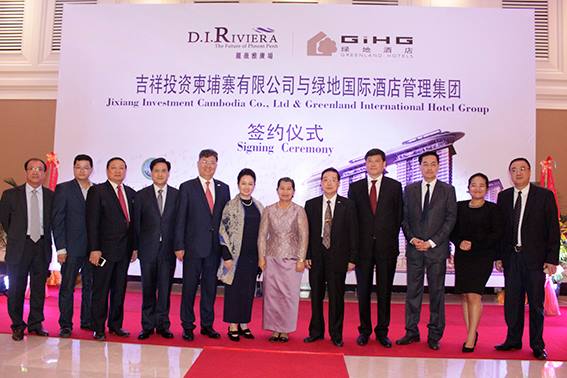
国际知名高端酒店品牌——绿地酒店将进驻柬埔寨金边钻石岛。
吉祥投资柬埔寨有限公司和绿地国际酒店管理集团的《金边绿地铂瑞酒店》签约仪式于5日晚上在金边市索菲特大酒店隆重举行。
柬埔寨副总理、联络国会、参议院和监察部部长棉森婉女士、吉祥投资柬埔寨有限公司董事长兼总裁陈红女士、绿地控股集团董事长兼总裁张玉良先生等共同出席见证签约仪式。
棉森婉:王国政府将为绿地在柬投资给予全力支持
柬埔寨副总理棉森婉出席酒店签约仪式,并与绿地集团董事长、总裁张玉良进行了亲切会谈。棉森婉副总理表示,柬埔寨政府正积极促进城市建设与经济发展,中柬传统友谊源远流长,具有扎实的合作基础。柬埔寨政府十分欢迎中国龙头企业绿地集团在柬埔寨旅游及其他产业领域进一步扩大投资,实现多元发展,将为绿地在柬投资给予全力支持。
绿地看好金边旅游产业未来发展前景
张玉良董事长表示,金边是柬埔寨的政治、经济、文化中心,也是柬埔寨产业发展最集中的地区,具有巨大的成长空间和蓬勃的生命力;它更是一座风光秀丽的历史名城,迷人的文化魅力吸引着来自全球各地的游客。
张玉良说,绿地十分看好金边城市发展,尤其是旅游产业的未来,相信此次与吉祥投资柬埔寨有限公司达成合作,必将成为绿地酒店品牌海外拓展的又一个重要里程碑。
张玉良:绿地铂瑞酒店必将成为展示金边迷人魅力的崭新窗口
张玉良表示,在全球酒店运营方面,我们拥有着丰富的成功经验,位于悉尼、洛杉矶及法兰克福市的绿地酒店自开业便获得了广泛市场赞誉,运营状况良好在旅游旺季甚至“一房难求”。
“我相信,在柬埔寨社会各界的关心与支持下,在与合作伙伴的共同努力下,即将诞生的绿地铂瑞酒店必将成为展示金边迷人魅力的一个崭新窗口,共同见证历史与未来交汇,为中柬两国友好合作再添崭新丰碑!”张玉良表示。
陈红:丽薇雅广场是吉祥公司在柬第一个投资项目
陈红董事长兼总裁的致词时表示,金边是柬埔寨首都,三江四水汇聚在此,被誉为东方小巴黎!钻石岛上的丽薇雅广场就在三江四水的交汇处,不仅风水独好!风景也是绝美!在丽薇雅广场,清晨可以看到使人振奋的日出圣光,傍晚可以看到令人陶醉的晚霞红韵!
丽薇雅广场是吉祥公司在柬埔寨的第一个投资项目,随着我们对本地情况的不断深入了解,在具有充分把握的条件下,我们还将开发新的项目。
她说:未来,吉祥公司不仅要有:“新思维,新理念,新高度,新目标”,还要有:大胸怀,大格局,大理想,大手笔。
倪红生:把上海商会打造成一流的商务交流平台
吉祥投资柬埔寨有限公司和绿地国际酒店管理集团的《金边绿地铂瑞酒店》签约仪式是由柬埔寨上海商会举办。
柬埔寨上海商会会长倪红生表示,今天,柬埔寨上海商会又增添了新的力量,我相信在商会新的领导团队努力下,柬埔寨上海海商会将以“海纳百川”的大胸怀,不断引入社会资源,加强与各国商会交流,实现信息共享,促进项目合作,必将取得更大的进步!
他说,今后柬埔寨上海商会还会不定期地举办各种商务活动,为广大会员提供沟通交流,合作共赢的商业平台。
他说:“我们柬埔寨上海商会的宗旨就是‘海纳百川’,我们欢迎有上海情节的广大朋友参加柬埔寨上海商会,让我们共同努力,把柬埔寨上海商会打造成一流的商务交流平台,更好地为广大会员服务。”
黄清水:我们期待不久能参加“金边绿地铂瑞酒店”开业典礼
柬埔寨柬华理事总会轮值常务副会长黄清水先生在出席吉祥投资柬埔寨有限公司和绿地国际酒店管理集团签约仪式时代表柬华理事总会、代表方侨生会长向合作双方表示热烈的祝贺!
他也表示希望吉祥投资柬埔寨有限公司和绿地国际酒店管理集团真诚合作,顺利把“金边绿地铂瑞酒店”建设好,我们期待在不久的将来参加“金边绿地铂瑞酒店”的开业典礼!
黄清水说,(上海)绿地控股集团有限公司是世界500强企业,柬埔寨王国正处在高速发展期,我们希望绿地控股集团借出席本次活动的时机,考察美丽的柬埔寨王国;也欢迎你们以后开发项目前来投资柬埔寨王国。
柬华总会负责协调全柬华人社团各项事务
黄清水说:“柬华理事总会是负责协调全柬埔寨华人社团各项事务,推动和发展华文教育,弘扬中华文化,促进经贸与投资交流,推进全柬华人之间的联系和友谊,增强全柬埔寨华人华侨凝聚力的华社最高领导机构。”
他继说:“我们愿意发挥纽带和桥梁作用,利用血缘、族缘、地缘、业缘的关系将本土华人华侨和中国企业、投资者的资源有效结合起来,实现优势互补,并帮助外资企业在柬埔寨实现落地投资与合作。”
绿地集团概况
张玉良董事长也透露,绿地集团是一家总部位于中国上海的特大型跨国企业集团,连续6年跻身财富世界企业500强,已形成以房地产为主业,大基建,大金融,大消费并举发展”的产业格局,总资产超过1100亿美元,业务遍及中国,美国,加拿大,澳大利亚,英国等四大洲十国百城。
绿地酒店产业板块具有雄厚规模和实力,建成及在建酒店70余家,资产规模40亿美元,已成为中国最大的酒店物业持有商和管理运营商之一。
柬埔寨金边绿地铂瑞酒店位于金边市中心钻石岛中区东部的滨河区,建筑面积4.23万平方米,客房472套,周边聚集政府机构、文化展览馆、国际学校及高档商业购物等城市综合设施。
应提的是,在上述签约仪式上,棉森婉副总理向全球中小企业联盟秘书长曹方颁发柬埔寨上海商会委任名誉顾问的聘书;以及向中保华安集团有限公司总裁孔宪明先生颁发柬埔寨上海商会委任荣誉会长的聘书等。
~柬华日报~
Subscribe to:
Posts (Atom)